Usage Information
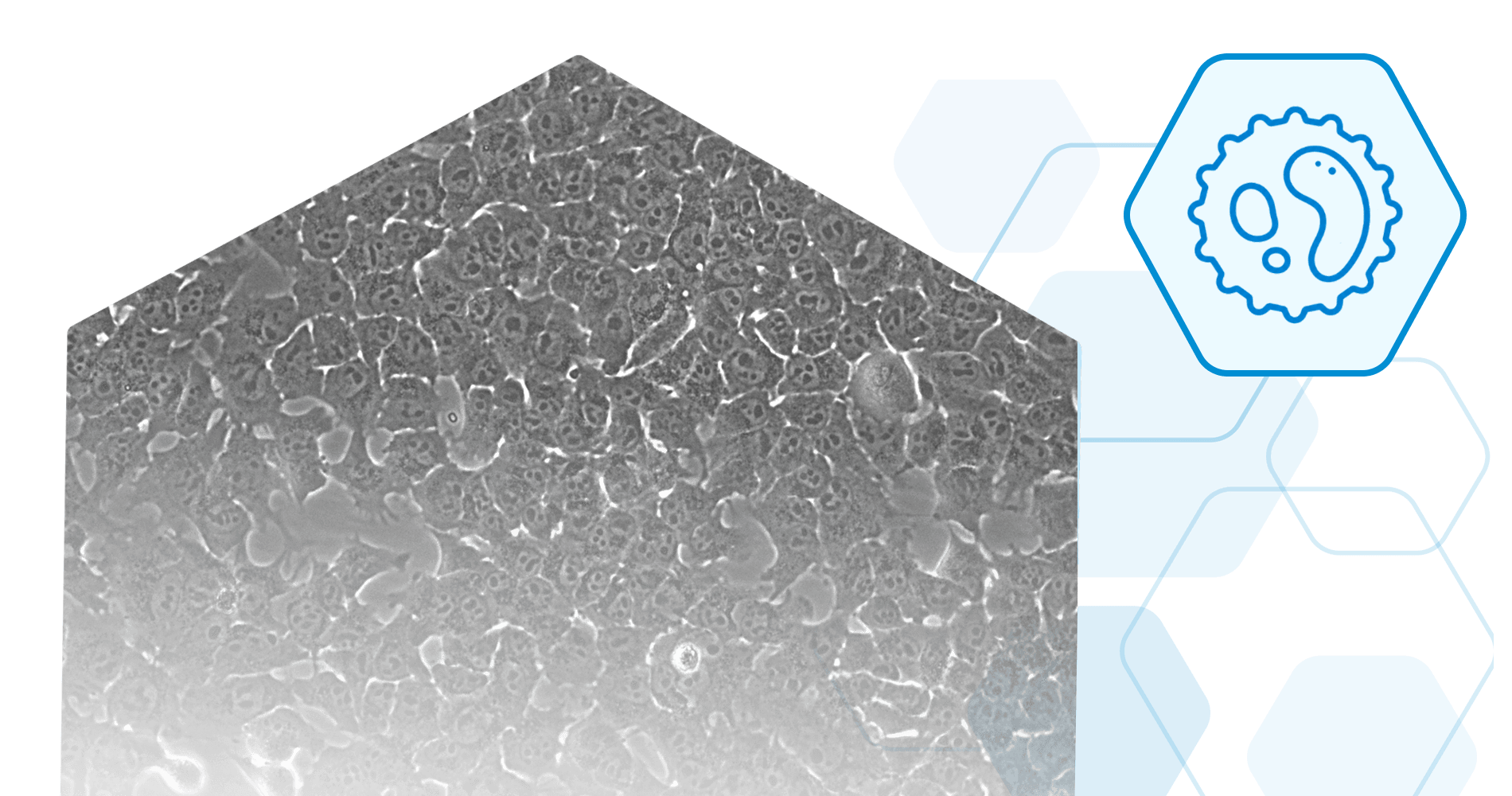
Hepa1-6 cells are suitable for in vitro and in vivo experimentation. Both syngenic C57L/J mice and immunocompromised mice can be used for in life studies, and will form tumors and spontaneous metastases following implantation of the cells, depending on the route of implantation (see below). Tumor formation in syngenic mice is highly variable, so for the most consistent results immunocompromised mice are recommended for studies.
The following chart provides some examples of Hepa1-6 cells used for tumor formation and studies.
Stable Reporter Cell Lines
Our Hepa1-6 reporter cell lines can be tracked in vivo, making them great tools for studying the mechanisms of tumor growth and metastasis, as well as evaluating the effects of various drugs or therapies in animals. Our Hepa1-6 cells are available with a variety of different reporters, including firefly luciferase (Fluc), enhanced green fluorescent protein (eGFP), or near-infrared fluorescent protein (iRFP). A dual reporter Hepa1-6-Fluc-Neo/eGFP-Puro cell line is available to facilitate multimodal imaging.
In order to ensure high, constitutive expression of the reporter proteins, our cell lines are generated by lentiviral vector transduction. The lentiviral vectors used for these transductions are self-inactivating (SIN) vectors in which the viral enhancer and promoter has been deleted. This increases the biosafety of the lentiviruses by preventing mobilization of replication competent viruses (Miyoshi et al., J Virol. 1998).