The LL/2-Fluc-Puro polyclonal cell line was generated by transducing parental LL/2 cells with lentiviral vector encoding firefly luciferase and the puromycin resistance gene (LV-Fluc-P2A-Puro (LV012)). Transduced cells were subsequently selected using puromycin.
This cell line has been tested for mycoplasma and no mycoplasma has been detected. The parental LL/2 cell line has been authenticated by short tandem repeat (STR) profiling.
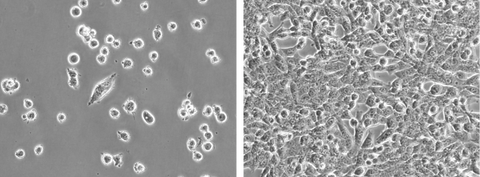 Low and high density cell photos (200x).
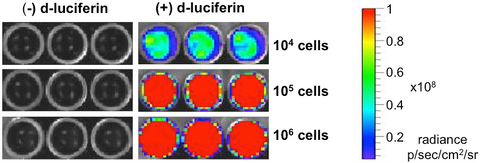 1 x 10⁴, 1 x 10⁵, or 1 x 10⁶ cells were placed in wells of a 96-well plate and 0.3 mg of d-luciferin was added to the indicated wells. The plate was immediately imaged using a Xenogen IVIS Spectrum.
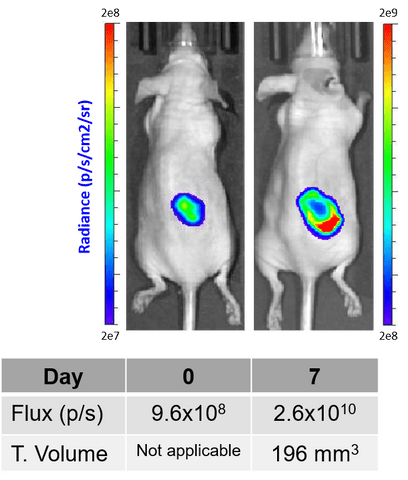 1 x 10⁷ cells were injected subcutaneously into the right flanks of female NCR athymic mice. Mice were imaged on Day 0 and 7 after cell implantation using a Xenogen IVIS Spectrum (10 minutes post intraperitoneal injection of d-luciferin at 150 mg/kg). Tumor size was measured using calipers. A representative mouse is shown.
Complete Growth Medium: High-glucose DMEM supplemented with 10% FBS, 1X Penicillin/Streptomycin, and 2 µg/mL puromycin.
LL/2 cells are loosely adherent with a mixed morphology. They easily come off tissue culture surfaces, and at high densities are prone to forming large clumps that can lift off of the plates as balls of cells. Some of these cells remain viable and can be collected by centrifugation and re-seeded if needed.
To maintain more uniform monolayers, passage cells when they reach ~80-90% confluency. For routine passaging, cells are recommended to be split at a 1:10 ratio every ~3 days.
These cells are suitable for in vitro and in vivo experimentation.
The luciferase transgene facilitates noninvasive bioluminescent imaging of implanted cells in vivo and cell-based assays in vitro.
While LL/2 cells are transplantable in syngeneic C57BL/6 mice, the immunogenicity of the luciferase reporter in this cell line can impact in vivo growth in immune-competent C57BL/6 mice. For the most consistent tumor growth and kinetics, immunocompromised mice are recommended for in vivo studies.
These cells can be amplified to generate additional frozen stocks and cryopreservation of low passage stocks in a designated cryopreservation medium is recommended.
These cells were generated by transduction with a self-inactivating Risk Group 3 (RG3) lentiviral vector. All work should be performed under appropriate biosafety conditions per institutional guidelines.

Don’t see what you need in our catalog? Our scientific team engineers cell lines, viral vectors, and assays and provides the characterization data you need to move forward with confidence.