Nalm6 is a B cell precursor leukemia cell line initiated from an adolescent male with acute lymphoblastic leukemia.1 The Nalm6 cell line is widely used for immune-oncology research, and the cells are part of the LL-100 blood cancer cell line panel, which consists of highly characterized leukemia and lymphoma cell lines for which whole-exosome and RNA sequencing is available.2,3
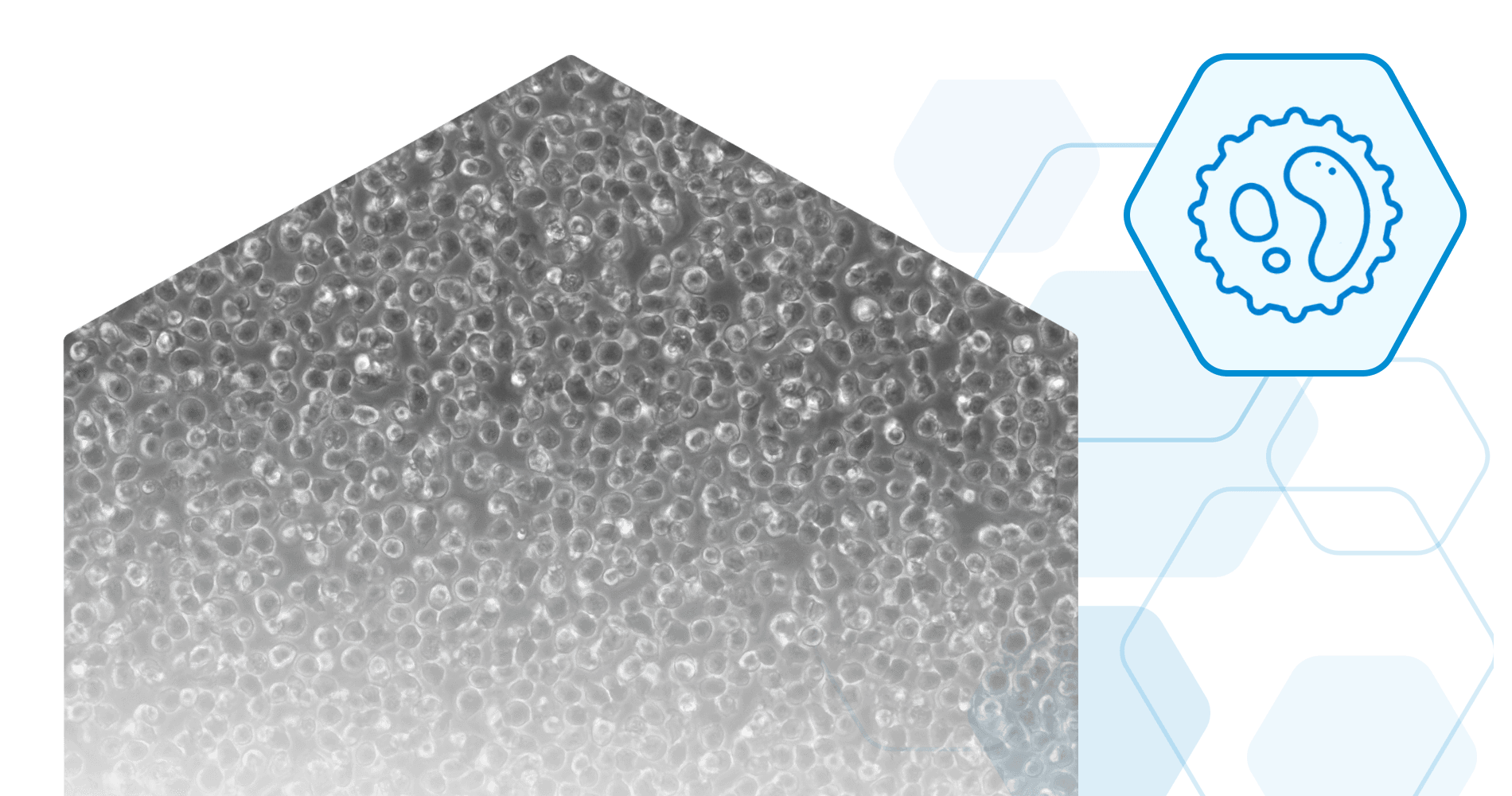
Nalm6 cells express relatively high levels of the tumor antigen CD194 and are frequently used a target cells in CD19-CAR-T cell killing and proliferation/activation assays.5,6 The cells are also frequently used as targets in the development of CD19 bi-specific antibodies and natural killer cell therapies.7,8 The cells express very low levels of the other tumor antigen targets CD204 and BCMA.9
Nalm6 cells exhibit tumorgenicity in immunocompromised (e.g., NSG, SCID-beige) mice and are frequently used for in vivo pre-clinical research. The cells form primary tumors when implanted subcutaneously,10 and experimental metastases to bone marrow, liver, spleen, lymph nodes, and the periodontal region are observed following intravenous implantation.11,12
The Imanis Nalm6 cell line originates from the ATCC Nalm6, clone G5 cell line (ATCC® CRL-3273™)*, which was deposited at ATCC in 2010.

Our Nalm6 reporter cell lines can be used for in vitro or in vivo research. The luciferase (Fluc) and green fluorescence protein (GFP) reporters facilitate easy quantitation of cells for in vitro assays. Additionally, luciferase can be used for tracking tumor growth non-invasively in living animals through bioluminescence imaging.
Our Nalm6-Fluc-Puro CD19 and CD20 panels include cell lines that overexpress luciferase as well as various surface receptor densities (undetectable, low, high, endogenous) of oncology targets CD19 and/or CD20.
Our cells are generated by lentiviral vector transduction, ensuring high, constitutive expression of the transgenes. The lentiviral vectors used for these transductions are self-inactivating (SIN) vectors in which the viral enhancer and promoter has been deleted. This increases the biosafety of the lentiviral vectors by preventing mobilization of replication competent viruses.13
References:
Don’t see what you need in our catalog? Our scientific team engineers cell lines, viral vectors, and assays and provides as much characterization data as you need to move forward with confidence.
